
Legal Services in Delhi
Consultation support across all districts of Delhi on court marriage, marriage registration, divorce and family law matters.
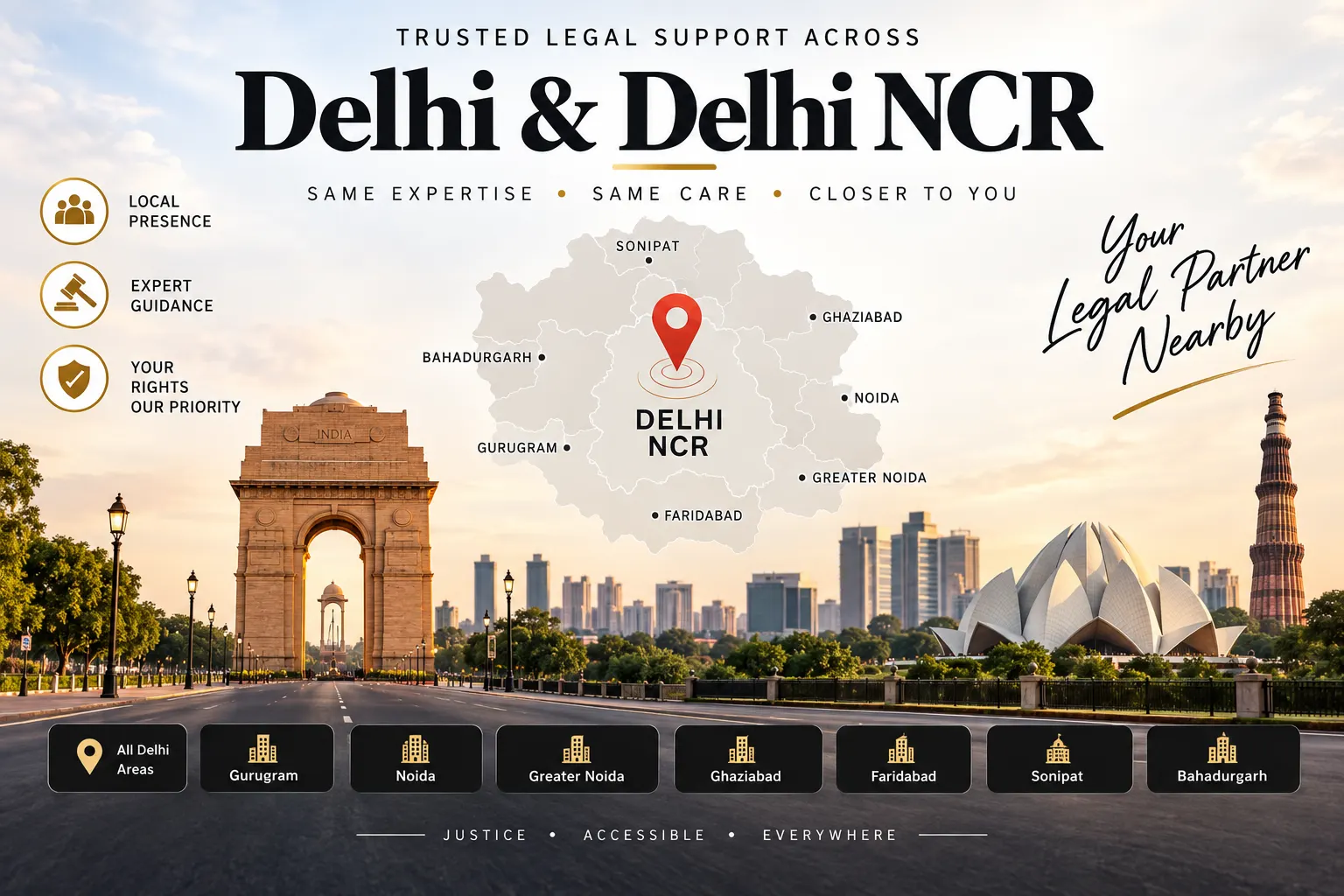
Legal Support in Delhi
Delhi is home to a wide range of residents across its many districts, each with different local needs when it comes to court marriage, marriage registration, divorce and family law matters. We provide consultation support to clients throughout the capital.
Services Relevant to Delhi Residents
Consultation Options
Services / consultation support are available for clients in Delhi, subject to the nature of the matter. Our verified office is located at H 92, G Block, First Floor, Karkardooma Court, Delhi – 110032. Delhi's family courts and district courts handle matters based on jurisdictional rules that can depend on residence, marriage location or where the cause of action arose — we can help clarify what applies to you.
Maintenance and Financial Support
Maintenance (sometimes called alimony) refers to financial support one spouse may be legally required to provide the other, during or after separation. For residents of Delhi, questions about maintenance often come up alongside divorce or domestic dispute matters, and we can help you understand what may apply to your income, needs and circumstances.
Domestic Violence Protections
The Protection of Women from Domestic Violence Act, 2005 provides civil remedies — including protection orders, residence orders and monetary relief — for those experiencing abuse within a domestic relationship. If you're in Delhi and facing this situation, confidential guidance is available to help you understand your options, whether or not you're ready to take formal action yet.
Documents You Should Keep Ready
Whatever matter brings you to us, having your documents organized in advance makes the process considerably smoother. This generally includes proof of identity and address, relevant certificates (marriage, birth, or otherwise depending on the matter), and passport-size photographs. For Delhi residents, we can confirm exactly what applies to your specific situation before you start gathering paperwork.
What to Expect From a Consultation
A first consultation is about understanding your situation clearly — what has already happened, what outcome you're hoping for, and what your realistic options are. For someone reaching out from Delhi, this typically starts with a phone or WhatsApp conversation, moving to a more detailed discussion once we understand the basic shape of your matter.
Confidentiality and Trust
Family law matters are often deeply personal, and we understand that discretion matters. Whether you're contacting us from Delhi or anywhere else nearby, your consultation and any documents you share are handled with strict confidentiality throughout.
Common Concerns People Have Before Reaching Out
Many people in Delhi hesitate before seeking legal guidance — unsure whether their situation is 'serious enough,' worried about cost, or simply not knowing where to start. There's no threshold you need to meet before asking a question; an initial conversation is exactly the place to figure out what, if anything, needs to happen next.
Choosing Between Mediation and Litigation
Not every family law matter needs to go through a fully contested court process. Where both sides are willing, mediation can offer a faster, less adversarial route to resolving disputes over divorce terms, custody or maintenance. We can help Delhi residents understand whether mediation is a realistic option for their situation before committing to a longer contested process.
Why Early Legal Guidance Helps
Reaching out early — before a dispute escalates, or before a deadline is close — generally gives you more options, not fewer. For residents of Delhi, understanding the landscape early, even if you're not ready to take formal action, tends to make later decisions clearer and less rushed.
Special Marriage Act for Inter-Caste and Inter-Religion Couples
For couples in Delhi coming from different castes or religions, the Special Marriage Act, 1954 offers a civil marriage route that doesn't require either party to convert or follow the other's religious customs. This is often the most straightforward path for interfaith and inter-caste couples, and we can walk you through the notice period and documentation involved.
Marriage Certificate: Getting It Right
A marriage certificate is your official proof of marriage, and it's worth getting the details — names, dates, addresses — exactly right the first time. For Delhi residents, we assist both with obtaining a certificate for the first time and with correcting errors (spelling, date of birth, address) on an existing one.
NRI and Cross-Border Matters
If you or your spouse live abroad, or if your marriage or divorce involves a foreign element, additional jurisdictional and documentation questions can come into play. Residents of Delhi with NRI family members or cross-border marriage matters can reach out for guidance on how Indian law applies alongside any foreign proceedings.
Understanding Court Marriage
Court marriage is a civil marriage solemnized under the Special Marriage Act, 1954, before a Marriage Officer, without requiring a religious ceremony. For residents of Delhi, this route is commonly chosen by inter-caste and inter-religion couples, or by anyone who simply prefers a straightforward civil process. It involves filing a notice, a statutory waiting period, and then formal solemnization with witnesses present.
Understanding Marriage Registration
Marriage registration is different from court marriage in that it usually formalizes a marriage that has already taken place — whether through a religious ceremony or otherwise. Residents in Delhi who've had a Hindu wedding, an Arya Samaj ceremony, or another religious function often come to us afterward to complete the legal registration, which produces the official marriage certificate needed for passports, visas and other formal purposes.
Understanding Divorce Options
When a marriage needs to end, there are generally two paths: mutual consent divorce, where both spouses agree and jointly petition the court, or contested divorce, where one party files on specific legal grounds. For Delhi residents, we start by helping you understand which path realistically fits your situation, since the two involve quite different timelines and processes.
Child Custody Considerations
When children are involved in a separation, custody decisions are made with the child's welfare as the central consideration — not simply which parent wants custody more. We help Delhi families understand the difference between sole, joint and shared custody, and what courts typically look at when making these decisions.
How the Consultation Works
- Share your requirement via WhatsApp, phone or the consultation form
- Discuss your situation and understand your available options
- Receive guidance on documentation and next steps